
Is Your Return Air Grill Sized Properly?
When homeowners think about air conditioning problems, they usually focus on the outdoor unit, thermostat, or refrigerant levels. But one of the most overlooked and most important components of your HVAC system is the return air grille.
If your return air grille is too small, your system may never perform the way it was designed to, no matter how new or efficient the equipment is. Let’s take a closer look at what return air does, why size matters, and how improper sizing can affect comfort, efficiency, and system longevity.
What Is a Return Air Grille?
 (HVAC Return Air Explained)
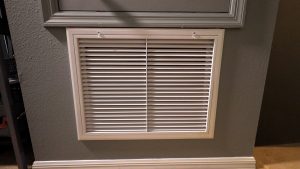
The return air grille is the opening where air from your home is pulled back into the HVAC system to be cooled (or heated) again. You’ll typically find return grilles on walls, ceilings, or sometimes in hallways or central areas of the home.
Think of the return air grille as your system’s intake. Just like an engine needs enough air to run efficiently, your AC system needs sufficient airflow to operate properly.
Why Proper Return Air Grille Size Is So Important for Your AC System
Air conditioning systems are designed to move a specific amount of air, measured in CFM (cubic feet per minute). As a general rule, most systems require about 400 CFM per ton of cooling.
For example:
- A 2-ton system needs roughly 800 CFM
- A 3-ton system needs roughly 1,200 CFM
- A 4-ton system needs roughly 1,600 CFM
If the return air grille is undersized, the system struggles to pull in the air it needs. This restriction forces the system to work harder, increasing strain on critical components.
Signs Your Return Air Grille May Be Too Small

An undersized return air grille can cause several noticeable issues, including:
- Uneven temperatures throughout the home
- Hot or cold spots in certain rooms
- Excessive system noise or whistling sounds
- Higher-than-normal energy bills
- Short cycling or longer run times
- Frozen evaporator coils
In many homes, especially older ones, return grilles were sized for smaller systems or were never upgraded when new HVAC equipment was installed.
Bigger Is Often Better When It Comes to Return Air Grilles
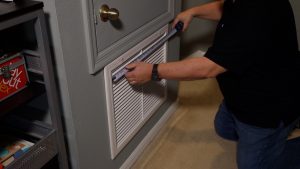
Unlike supply vents, return air grilles benefit from being larger. A properly sized return allows air to move more slowly and quietly, reducing resistance and improving overall system efficiency.
Larger return grilles can:
- Improve airflow
- Reduce system noise
- Lower energy consumption
- Extend the lifespan of your HVAC equipment
In some cases, adding an additional return or upsizing an existing grille can make a dramatic difference in comfort without replacing the entire system.
Return Air Grille Size Is Part of a Bigger HVAC Airflow Picture
It’s important to note that return air grille size is just one part of the overall airflow equation. Ductwork design, filter type, blower performance, and system sizing all work together.
That’s why a proper evaluation should look at the entire system, not just the equipment.
How Greens Energy Services Helps Orlando Homeowners Improve HVAC Airflow
 At Greens Energy Services, we believe comfort starts with proper design — not just installing equipment. When we evaluate an HVAC system, we look closely at airflow, ductwork, and return air sizing to ensure your system can perform at its best.
If your home isn’t cooling or heating evenly, your system seems louder than it should be, or your energy bills keep climbing, your return air grille size could be part of the problem.
Our team would be happy to take a look and help you determine whether improvements to your return air system could improve comfort, efficiency, and long-term reliability.
To schedule an appointment simply give us a call at 407-282-5000 or click the “schedule service” button on the top right of this page.
When your HVAC system can breathe properly, your home stays more comfortable, more efficient, and better protected for the long term.
Common Questions About Return Air Grille Size
How do I know if my return air grille is too small?
If your system is noisy, struggles to maintain temperature, or has uneven airflow, your return air grille may be undersized.
Can replacing a return grille really improve AC performance?
Yes. Proper return air sizing can significantly improve airflow, reduce strain on the system, and lower energy costs.
Should I add another return air grille?
In some homes, adding an additional return is the best solution. A professional HVAC evaluation can determine the right approach.
Does return air grille size affect energy efficiency?
Absolutely. Restricted airflow forces your system to work harder, increasing energy usage and wear.
Related Services: HVAC System Evaluation • Airflow & Ductwork Improvements • AC Repair & Replacement in Orlando, FL


